Planning a summer trip to Korea but can't decide between Jeju Island and Busan? You're not alone — this is the single most common dilemma among both Korean and international travelers every summer. Both destinations offer stunning coastlines, incredible food, and unforgettable experiences — but they deliver completely different vibes.
The short version? If you're craving nature and serenity, Jeju is your answer. If you want city energy mixed with ocean views, Busan is calling your name. But the real answer requires a deeper look — so let's break it down category by category and help you make the perfect choice!

✈️ Getting There — Which is Easier to Reach?
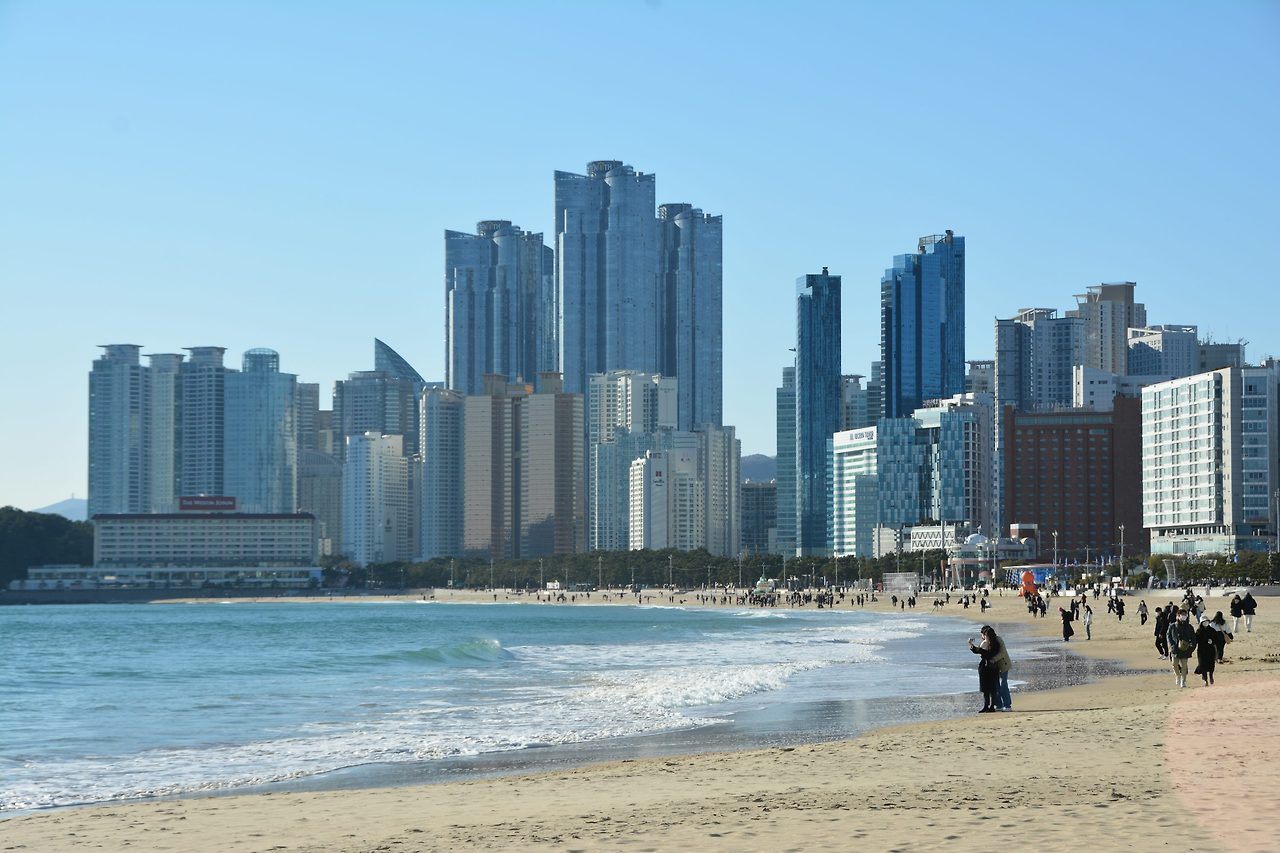
Jeju Island requires a flight — there's no other way to get there. From Seoul's Gimpo Airport it's about 1 hour, with one-way tickets ranging from 50,000 to 150,000 won. During peak summer (late July to August), flight prices can double or triple, so booking at least a month in advance is strongly recommended.
Busan gives you multiple options. The KTX high-speed train from Seoul takes just 2 hours 30 minutes for 59,800 won — city center to city center, no airport hassle. You can also fly (1 hour, from 50,000 won) or take an express bus (4 hours, from 25,000 won). The KTX strikes the best balance of speed, price, and convenience, which is why it's the most popular choice.
The verdict: Busan wins decisively on accessibility. Multiple transport options, no flight dependency, and consistently affordable pricing. Jeju requires flights that can get expensive fast, especially in peak summer.

🏖️ Beaches — Which Has the More Beautiful Ocean?
Jeju's beaches feel exotic — almost tropical. Hyeopjae Beach has that dreamy emerald-turquoise water that looks like it belongs in Southeast Asia. Woljeong-ri Beach has crystal-clear water so transparent you can see your toes from waist-deep. Udo Island's coral beach is formed from actual red algae deposits, creating a uniquely white shoreline unlike anything else in Korea. And then there's Samyang Black Sand Beach — an entirely black volcanic beach where you can do natural sand therapy.
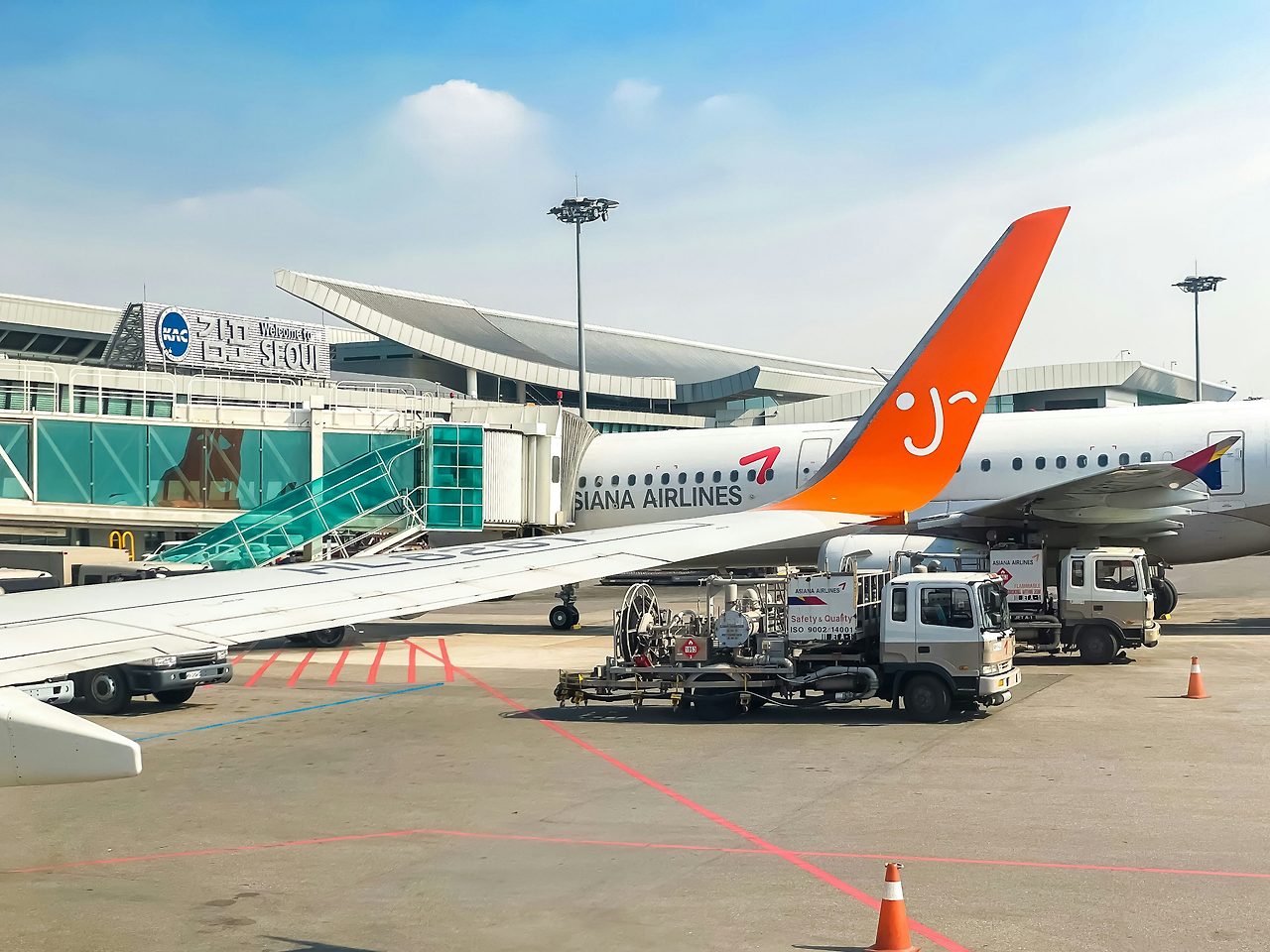
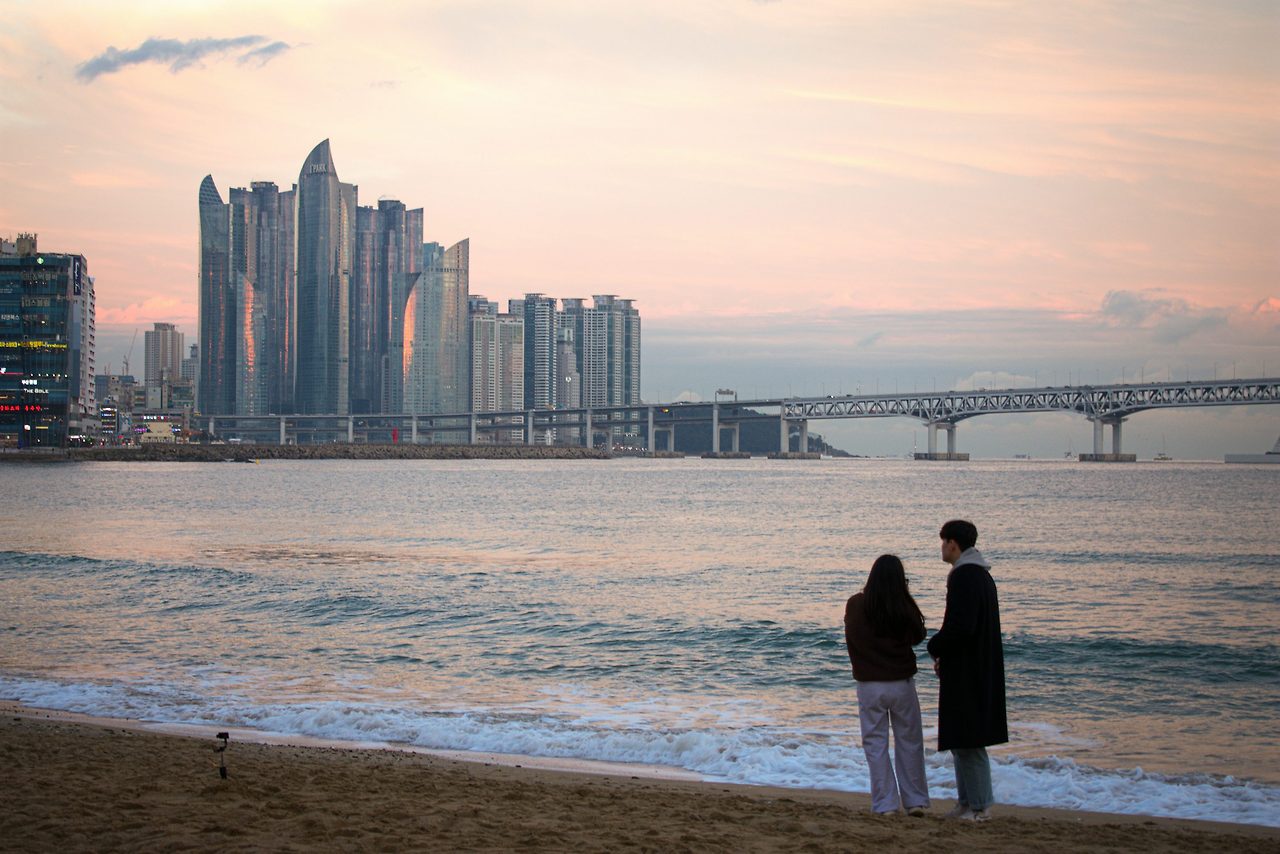
Busan's beaches are urban beaches with their own distinct charm. Haeundae is the iconic Korean beach — high-rise buildings towering behind a wide sandy shore packed with life and energy. Gwangalli offers a more romantic vibe with the spectacular Gwangan Bridge lit up at night as your backdrop. Songjeong Beach has earned the nickname "Korea's Waikiki" for its consistent surf waves and laid-back atmosphere.
The verdict: If you want untouched, nature-first beauty that makes you forget you're in Korea, choose Jeju. If you love the energy of a vibrant city beach with skyscrapers and nightlife steps away, choose Busan.
🍜 Food — Which City Eats Better?
Honestly? Both are incredible. But the food experiences are completely different.
Jeju's food identity revolves around black pork and fresh seafood. Jeju black pork (heuk-dwaeji) has a depth of flavor and texture that makes mainland pork seem ordinary by comparison — once you've had it, regular samgyeopsal just doesn't hit the same way. Haenyeo (female divers) catch abalone, conch, and sea urchin fresh from the ocean daily, and you can eat sea urchin bibimbap right at the harbor. In summer, hanchi (Jeju squid) is in peak season and absolutely must be tried.
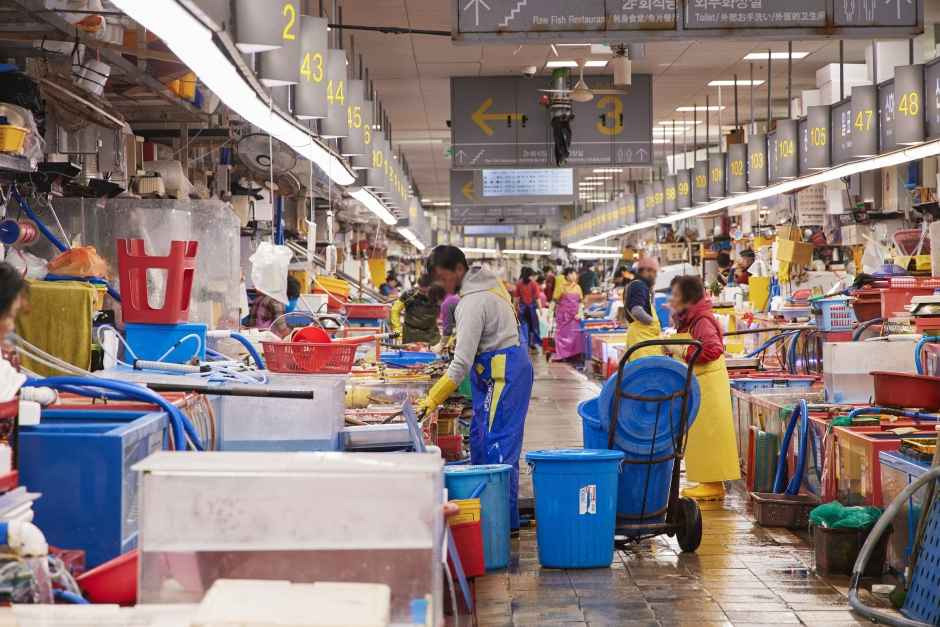
Busan's food scene is broader and more varied. Dwaeji gukbap (pork soup rice) is Busan's soul food — rich, hearty, and available at 24-hour joints. Milmyeon is Busan's unique cold noodle dish that exists nowhere else in Korea — perfect for beating summer heat. Jagalchi Fish Market lets you buy live seafood on the first floor and eat it freshly prepared upstairs. Ssiat hotteok (seed-filled sweet pancakes) at Gukje Market are legendary street snacks you'll crave long after you leave.
The verdict: For premium seafood and the unique black pork experience, choose Jeju. For wider food variety, street food culture, and incredible market experiences, choose Busan.

🎡 Things to Do — What Activities Are Available?
Jeju is a nature-lover's paradise. Snorkeling in Udo's crystal waters, hiking Hallasan Mountain (Korea's tallest peak), walking the famous Olle coastal trails, exploring the ancient Manjanggul lava cave, kayaking along dramatic cliffs, and cooling off at Wonang Waterfall in the middle of a subtropical forest. Renting a car and driving the coastal roads reveals constantly changing scenery — and in June, the hydrangea-lined roads are breathtakingly beautiful. Jeju's cafe culture is also exceptional, with oceanview cafes tucked into every coastal village.
Busan packs an enormous amount of variety into a compact, walkable city. The Blue Line Park Sky Capsule glides along the coast with panoramic ocean views. Gwangan Bridge yacht tours take you right under the iconic bridge at sunset. Gamcheon Culture Village is an Instagram dream of colorful hillside murals. Haeundae and Songjeong offer excellent surfing. Night markets buzz with energy every evening. And the city's subway system means you can hop between beaches, mountains, markets, and temples without ever needing a car.
The verdict: For outdoor adventure and nature immersion, choose Jeju. For a diverse mix of urban activities, cultural sites, and beach life all in one accessible city, choose Busan.
🌙 Nightlife — What Happens After Dark?
This is where Busan pulls clearly ahead.
Busan at night is electric. Gwangalli Beach transforms into an open-air lounge with the glowing Gwangan Bridge as a backdrop — grab a beer from a convenience store and sit on the sand with hundreds of others doing the same thing. Haeundae's rooftop bars offer stunning elevated ocean views. The Haeundae Night Market runs from 7:30PM with street food from around the world. Seomyeon and Nampodong have active club and bar scenes. There's always something happening somewhere.
Jeju at night is peaceful. Jeju City has some bars and cafes, but most tourist areas quiet down significantly after sunset. What Jeju offers instead is something Busan can't match — genuinely dark skies for stargazing, the sound of waves on empty beaches, and coastal drives with nothing but moonlight on the ocean. Jeju's nighttime is about slowing down and finding calm.
The verdict: For vibrant nightlife with views, music, and energy, choose Busan. For quiet healing evenings under the stars, choose Jeju.

💰 Budget — Which is Cheaper?
Overall, Busan is significantly more budget-friendly.
Transportation: KTX Seoul to Busan costs a flat 59,800 won. Seoul to Jeju flights range from 50,000 to 150,000 won — and during peak summer, the higher end is far more common.
Accommodation: Busan guesthouses start around 30,000 won, hotels from 80,000 won. Jeju summer accommodation averages 1.5 to 2 times higher, with hotels commonly starting at 150,000 won during peak weeks.
Getting around: Busan's subway and bus system covers virtually every tourist site for 5,000 to 10,000 won per day on a T-money card. Jeju essentially requires a rental car (50,000~80,000 won per day plus fuel and parking), since public transport is limited.
Dining: Comparable overall, but Busan's signature dishes like dwaeji gukbap (9,000 won) and milmyeon (8,000 won) are generally cheaper than Jeju's black pork (15,000 won and up per portion).
The verdict: If budget is a major factor, Busan offers dramatically better value across every category. Jeju's flight + rental car + higher accommodation costs add up quickly.
📅 How Many Days Do You Need?
Jeju needs at least 2 nights 3 days to see the highlights, and 3 nights 4 days is ideal. The island naturally divides into east, west, and south zones — each deserves roughly a full day. Adding Udo Island means one more day. Rushing Jeju defeats the purpose of going there.
Busan works beautifully in just 1 night 2 days. Haeundae, Gwangalli, Gamcheon Culture Village, and Jagalchi Market are all within subway reach of each other. With 2 nights 3 days you can explore at a relaxed pace and still see everything on your list.
The verdict: Short on time? Busan delivers a complete experience in just a weekend. Have a longer vacation? Jeju rewards those extra days with deeper exploration and real relaxation.

🌦️ Summer Weather — Which is More Comfortable?
Jeju is hot and humid in summer, but ocean breezes keep it slightly more bearable than inland cities. However, Jeju is directly in the path of typhoons and experiences frequent sudden rain showers — weather can change dramatically within an hour. Always carry an umbrella.
Busan is similarly hot and humid, but the sea breeze along the beaches provides natural cooling. The monsoon season (mid-June to mid-July) brings heavy rain, but once it passes, clear sunny skies take over. Being a major city, Busan has plenty of indoor alternatives for rainy days — shopping malls, aquariums, museums, and indoor attractions.
The verdict: Weather-wise they're comparable, but Busan's abundance of indoor backup options gives it a slight practical advantage when rain disrupts plans.
🎯 Final Verdict — Which One is Right for YOU?
After comparing every major category, the answer comes down to one simple question: what kind of traveler are you?
Choose Jeju if you are someone who... wants to escape into nature and genuinely disconnect. Dreams of swimming in emerald waters and exploring volcanic landscapes. Enjoys road trips and doesn't mind renting a car. Prefers quiet evenings over busy nightlife. Has at least 3 days to spare. Wants to feel like you've left Korea and landed somewhere tropical.
Choose Busan if you are someone who... loves the energy of a city that also has beautiful beaches. Wants the most experiences packed into the shortest time. Prefers using public transport over driving. Enjoys vibrant nightlife and night markets. Is traveling on a tighter budget. Has only 1 to 2 days available.
And the ultimate answer? If your schedule and budget allow — do both! A Busan 2-night + Jeju 3-night combination is the perfect Korean summer trip. You can fly directly from Busan's Gimhae Airport to Jeju in just 1 hour, making the transition seamless. That way you get the best of both worlds — city beach energy in Busan and natural paradise healing in Jeju.

📌 Plan Your Trip with These Helpful Guides!
👉 [Jeju Island Summer Travel Complete Guide]👉 [Busan Summer Travel Complete Guide]👉 [Korea Transportation Complete Guide]👉 [Korean Food Complete Guide] 👉 [Korea Summer Travel Complete Guide]
☀️ Korea Summer Travel Complete Guide | Beaches · Hydrangeas · Festivals · Best Destinations 2026!
🌟 Summer in Korea is an Absolute Adventure!June through August in Korea — there is simply no better time to experience the country at its most vibrant and alive! 🌊 From crystal-clear beaches and mountain waterfalls to stunning hydrangea flower road
visit-korea-guide.tistory.com
🍜 Korean Food Complete Guide | Must-Try Korean Dishes for Foreign Visitors 2026!
🌟 Eating Korean Food is More Than a Meal — It's a Cultural Experience!Riding the global wave of K-dramas and K-pop, Korean food has firmly established itself as a worldwide trend! Traditional dishes like bibimbap, bulgogi, and kimchi — as well as ev
visit-korea-guide.tistory.com
🚇 Korea Transportation Complete Guide | T-money · Subway · KTX · Bus · Taxi 2026!
🌟 Korean Public Transport is One of the Best in the World!The subway is the most beloved form of transportation among foreign visitors thanks to its punctuality and clean environment. Korea's ultra-fast KTX trains, convenient subway network, and easy T-
visit-korea-guide.tistory.com
🏖️ Busan Summer Travel Complete Guide | Haeundae · Gwangalli · Gamcheon · Food 2026!
🌊 Summer in Busan is Korea's Ultimate Beach Destination!Busan is famous for its cool ocean breezes and incredibly fresh seafood — and summer is absolutely the best season to visit! Enjoy ocean swimming and water sports at Haeundae and Gwangalli beache
visit-korea-guide.tistory.com
🌴 Jeju Island Summer Travel Complete Guide | Beaches · Activities · Food · Udo Island 2026!
🌊 Korea's Hawaii — Summer in Jeju Hits Different!Jeju Island is often called the "Hawaii of Korea" for its exotic natural scenery and unique culture! From the UNESCO World Natural Heritage Site of Hallasan Mountain and massive lava tube caves to subtr
visit-korea-guide.tistory.com


