Planning your first trip to Korea? You probably have a million questions — and you're not alone. These are the 20 questions that first-time visitors ask most frequently, answered clearly and honestly so you can travel with total confidence!

📷 Photo source : Korea Tourism Organization (www.visitkorea.or.kr)
🛫 Arrival & Preparation
Q1. Do I need a visa to visit Korea?
Korea has visa exemption agreements with approximately 100 countries. Citizens of major travel nations including the US, UK, Canada, Australia, and EU countries can enter Korea without a visa for tourism purposes for 30 to 90 days.
However, the exact visa-free period varies by nationality, so always check with your country's foreign affairs department or the Korean embassy website before departure. As of 2026, the K-ETA (Korea Electronic Travel Authorization) system is in effect for certain nationalities — make sure to verify whether you need one before booking your flight!
Q2. How do I get from Incheon Airport to Seoul?
The most popular option is the AREX Airport Railroad, and you have two choices.
The Express Train takes you from Incheon Airport to Seoul Station in just 43 minutes with no stops for 11,000 won. It's fast, comfortable, and straightforward. The All-Stop Train takes 66 minutes but costs only 4,950 won with a T-money card — significantly cheaper and still very convenient. You can also transfer to other subway lines along the way.
Taxis cost around 60,000 to 80,000 won to central Seoul, and airport limousine buses (10,000~18,000 won) drop you at major hotel doorsteps. For the best balance of cost and convenience, the All-Stop AREX with a T-money card is hard to beat.
👉 Read more: [Korea Transportation Complete Guide | T-money · Subway · KTX · Bus · Taxi 2026!]
🚇 Korea Transportation Complete Guide | T-money · Subway · KTX · Bus · Taxi 2026!
🌟 Korean Public Transport is One of the Best in the World!The subway is the most beloved form of transportation among foreign visitors thanks to its punctuality and clean environment. Korea's ultra-fast KTX trains, convenient subway network, and easy T-
visit-korea-guide.tistory.com

Q3. How do I get internet access in Korea?
The easiest method by far is an eSIM. Purchase one on Klook or KKday before your flight, install it on your phone, and you'll have instant internet connectivity the moment you land in Korea. No SIM card swapping needed, and your home number stays active.
If you need a Korean phone number for services like Kakao Taxi or food delivery apps, buy a physical USIM at the SKT or KT booth in the Incheon Airport arrivals hall. You'll receive a Korean 010 number that works with local apps.
Traveling with family or a group? A Pocket WiFi device lets up to 5 people connect simultaneously from one rental unit — pick it up and return it at the airport.
👉 Read more: [Korea SIM Card & Internet Complete Guide | eSIM · USIM · Pocket WiFi 2026!]
📱 Korea SIM Card & Internet Complete Guide | eSIM · USIM · Pocket WiFi · Free WiFi 2026!
🌟 Mission #1 When You Arrive in Korea = Get Connected!The very first thing you need to do when you land in Korea — get your internet connected! 📱 Essential Korean travel apps like Naver Maps, Kakao Taxi, and delivery apps all require internet! The
visit-korea-guide.tistory.com
Q4. Can I get by with English in Korea?
In Seoul's major tourist areas like Myeongdong, Hongdae, Itaewon, and Gangnam, basic English communication is generally possible. Subway announcements and signage are all provided in English, Chinese, and Japanese.
Outside Seoul and in local restaurants, traditional markets, and smaller shops, English can be hit or miss. This is where the Papago app becomes your best friend. Made by Naver (Korea's Google equivalent), it offers Korean-English translation that's significantly more accurate than Google Translate for Korean. The camera function lets you point your phone at a Korean menu and get an instant translation — it's genuinely a game-changer for navigating non-touristy areas.

💰 Money & Payment
Q5. Do I need a lot of cash?
Korea is one of the most card-friendly countries in the world. Visa and Mastercard are accepted at convenience stores, cafes, restaurants, taxis, shopping malls — virtually everywhere you'd normally spend money.
That said, you will need cash for traditional markets like Namdaemun and Gwangjang, street food vendors, and T-money card top-ups. The recommended ratio is roughly 70% card, 30% cash. Carrying 30,000 to 50,000 won in cash at all times should cover you comfortably.
For the best exchange rates, change only a small amount at Incheon Airport for immediate transport costs, then do your main exchange at the specialized shops in Myeongdong or Euljiro — rates there are consistently better than banks or airport counters.
👉 Read more: [Korea Currency & Money Exchange Complete Guide | Won · Exchange · ATM · Card Payment 2026!]
💰 Korea Currency & Money Exchange Complete Guide | Won · Exchange · ATM · Card Payment 2026!
🌟 Understanding Korean Money is Step One of Your Trip!The currency used in Korea is the Won (₩, KRW)! 💰 Korea is one of the most card-friendly countries in the world, but you'll still need cash for traditional markets, street food stalls, and T-mon
visit-korea-guide.tistory.com
Q6. Do I need to tip at restaurants?
No — not at restaurants, not at cafes, not in taxis, not at hotels. Tipping does not exist in Korean culture. Service charges are already included in every price you see.
If you attempt to leave a tip, the server will likely assume you forgot your change and run after you to return it. Some may politely decline or look genuinely confused. For travelers coming from countries where 15-20% tips are standard, Korea's no-tipping culture is one of the most welcome surprises — and a significant boost to the travel budget.
Q7. How expensive is Korea?
Korea's cost of living varies dramatically depending on what you're spending on. Here's a realistic breakdown.
Very affordable: Public transport (subway ride: 1,400 won), convenience store meals (3,000~5,000 won), street food (1,000~3,000 won), coffee (Americano: 4,000~5,000 won).
Moderate: Restaurant meals (8,000~15,000 won), KTX Seoul to Busan (59,800 won), hanbok rental (15,000~30,000 won), museum admissions (3,000~5,000 won).
Expensive: Fine dining Korean cuisine (50,000 won and up), hotel accommodations (150,000 won per night and up), and fruit — yes, fruit in Korea is genuinely expensive compared to most countries.
For daily budgets: budget travelers can manage on roughly 70,000 won, mid-range travelers should plan for about 200,000 won, and luxury travelers will spend 400,000 won or more per day.
🍜 Food & Dining
Q8. Can vegetarians eat well in Korea?
Honestly, Korea is not the easiest country for strict vegetarians. Most Korean dishes include meat, seafood, or anchovy-based broth, and even seemingly vegetable-only side dishes often contain fish sauce or shrimp paste.
But it's definitely not impossible. Temple food (사찰 음식) restaurants serve 100% vegan Buddhist cuisine — "Balwoo Gongyang" in Seoul is a famous example. Bibimbap can be ordered without meat, and most namul (seasoned vegetable) side dishes minus the kimchi are plant-based.
Seoul's Itaewon, Seongsu-dong, and Hannam-dong neighborhoods have seen a rapid growth in vegan-friendly cafes and restaurants in recent years. Learning the phrase "채식이에요" (chaesik-ieyo — I'm vegetarian) or "고기 빼주세요" (gogi ppae-juseyo — please remove the meat) will help enormously at regular restaurants.
Q9. I can't handle spicy food — will I survive?
Absolutely! Korean cuisine has plenty of non-spicy options that are just as delicious.
Bulgogi, galbi, japchae, gimbap, mandu (dumplings), samgyetang (chicken ginseng soup), kalguksu (knife-cut noodles), and donkatsu (pork cutlet) are all completely free of spice. Even at fried chicken restaurants, choosing "huraideu" (plain fried) gives you zero heat.
When ordering dishes that are typically spicy, the phrases "안 맵게 해주세요" (an maepge haejuseyo — please make it not spicy) or "덜 맵게 해주세요" (deol maepge haejuseyo — please make it less spicy) will usually get you an adjusted version. One important note: when a Korean person tells you something is "not spicy," they mean by Korean standards — which can still be quite spicy for unaccustomed palates. Keep milk or yogurt nearby rather than water — dairy products are far more effective at neutralizing capsaicin.
👉 Read more: [Korean Food Complete Guide | Must-Try Korean Dishes for Foreign Visitors 2026!]
🍜 Korean Food Complete Guide | Must-Try Korean Dishes for Foreign Visitors 2026!
🌟 Eating Korean Food is More Than a Meal — It's a Cultural Experience!Riding the global wave of K-dramas and K-pop, Korean food has firmly established itself as a worldwide trend! Traditional dishes like bibimbap, bulgogi, and kimchi — as well as ev
visit-korea-guide.tistory.com
Q10. Is it true that side dishes are really free?
One hundred percent true — and it never stops being wonderful.
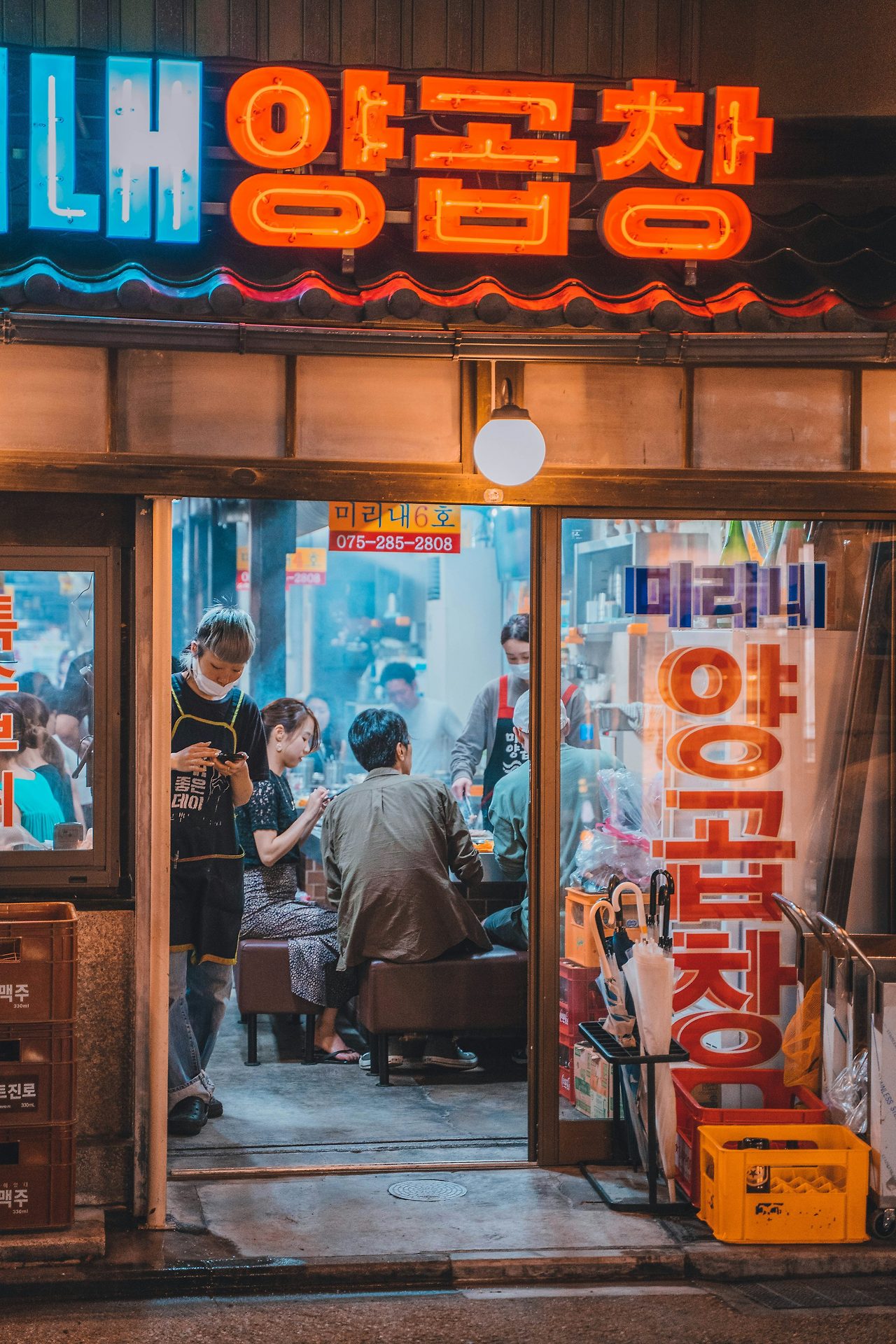
Order any main dish at a Korean restaurant and 3 to 7 small plates of banchan (side dishes) appear on your table automatically. Kimchi, seasoned bean sprouts, spinach, pickled radish, and more — all included in the price of your meal. When you finish a dish, ask "반찬 더 주세요" (banchan deo juseyo) and they'll bring a fresh serving at no additional charge.
At Korean BBQ restaurants, the lettuce, ssamjang (dipping paste), garlic, and other wrapping ingredients are also free and refillable. It's a uniquely Korean dining custom that international visitors universally love.

📷 사진 출처 : 한국관광공사(www.visitkorea.or.kr)
🚇 Getting Around
Q11. Do I really need a T-money card?
Yes — buy one the minute you arrive. It's the single most useful item for traveling in Korea.
One card covers subways, buses, and even taxis across the entire country. The biggest advantage is the transfer discount — when transferring between buses and subways, up to 4 transfers are essentially free within a set time window. Paying cash means you pay full price every single time, which adds up quickly.
T-money cards cost 2,500 won and are available at any convenience store (GS25, CU, 7-Eleven). Top up with cash at the same stores or at subway station machines. The card also works for purchases at convenience stores and vending machines, making it useful well beyond transportation.
Q12. How do I get from Seoul to Busan?
The most popular choice is the KTX high-speed train. Seoul Station to Busan Station takes approximately 2 hours 30 minutes, with standard seats costing 59,800 won. The "Korail Talk" app supports English booking and is the easiest way to reserve tickets.
If you're planning to visit multiple cities, look into the KR PASS — a foreigner-exclusive unlimited train pass. A 3-day consecutive pass costs approximately $109 USD and covers all KTX and most other train routes nationwide.
Flying takes about 1 hour (50,000~100,000 won), and express buses take roughly 4 hours (from 25,000 won). Considering the combination of speed, comfort, city-center-to-city-center convenience, and price, the KTX offers the best overall value for most travelers.
👉 Read more: [Korea Transportation Complete Guide | T-money · Subway · KTX · Bus · Taxi 2026!]
🚇 Korea Transportation Complete Guide | T-money · Subway · KTX · Bus · Taxi 2026!
🌟 Korean Public Transport is One of the Best in the World!The subway is the most beloved form of transportation among foreign visitors thanks to its punctuality and clean environment. Korea's ultra-fast KTX trains, convenient subway network, and easy T-
visit-korea-guide.tistory.com

🏛️ Sightseeing & Culture
Q13. Do I really get free palace entry if I wear hanbok?
Yes — this is real and it's fantastic! Wearing a complete traditional hanbok set (top jeogori plus bottom chima or baji) grants you free admission to Gyeongbokgung, Changdeokgung, Deoksugung, and Changgyeonggung palaces. The policy has been active since 2013 and is still fully in effect in 2026.
Hanbok rental shops surround Gyeongbokgung Palace, with basic rentals starting from 15,000 won for 3-4 hours. Hair styling packages run 35,000 to 60,000 won. Booking on Klook or KKday often gets you a better deal than walk-in prices. Beyond the free entry, walking through palace grounds in hanbok draws genuine smiles and compliments from Korean passersby — many visitors describe it as one of their most memorable Korea experiences.
👉 Read more: [Hanbok Experience Complete Guide | Rental · Prices · Free Palace Entry · Photo Spots 2026!]
👘 Hanbok Experience Complete Guide | Rental · Prices · Free Palace Entry · Best Photo Spots 2026!
🌟 Wearing Hanbok is a Time Travel to the Joseon Dynasty!Wearing hanbok is not just a costume experience — Koreans genuinely welcome and celebrate when foreign visitors show interest in their traditional culture! As you walk through the streets, Korean
visit-korea-guide.tistory.com
Q14. What exactly is a jjimjilbang?
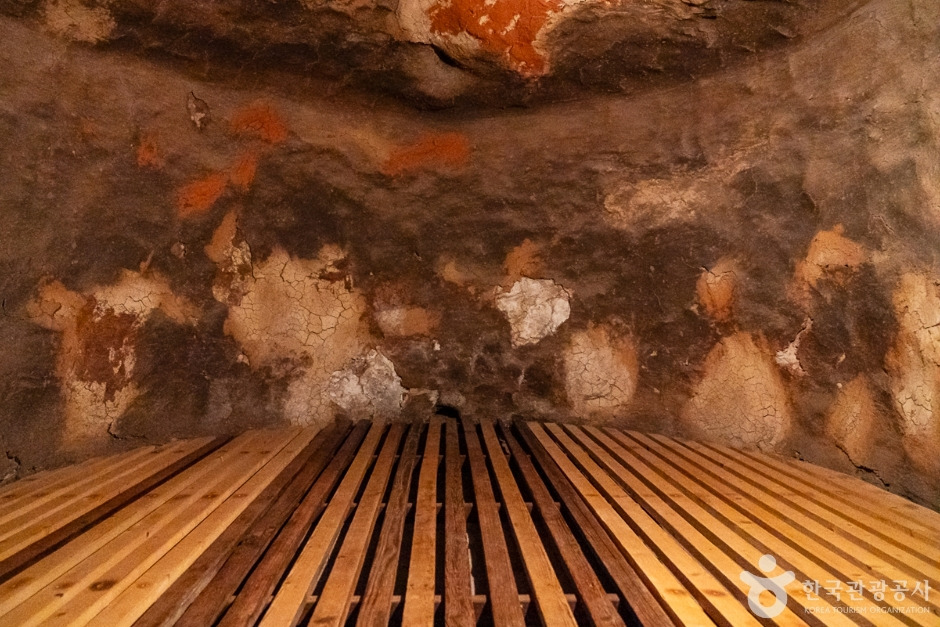
A jjimjilbang is a large Korean bathhouse complex that combines sauna rooms, a sleeping area, restaurant, and various entertainment facilities — all under one roof, open 24 hours. If you've watched K-dramas and seen characters wearing matching outfits with towel horns on their heads eating eggs, that's a jjimjilbang scene.
For about 15,000 to 20,000 won, you get access to the bathhouse, multiple themed sauna rooms (clay room, salt room, ice room, cedar room), sleeping quarters, and common areas. Many budget-conscious travelers use jjimjilbang as overnight accommodation — it's significantly cheaper than even the most basic hotel.
The communal bathing part can feel unfamiliar for first-time visitors, but it's a uniquely Korean experience that most people end up loving once they try it. The deep relaxation and cultural immersion are truly one of a kind.
👉 Read more: [Korean Jjimjilbang Complete Guide | How to Use + Best Seoul Spots 2026!]
🛁 Korean Jjimjilbang (Sauna) Complete Guide | How to Use + Best Seoul Spots 2026!
🌟 You've Seen It in K-Dramas — Now Experience It Yourself!As K-content continues to sweep the globe, foreign visitors are flooding into Korea for K-beauty, K-culture, and K-pop — but the latest craze taking the world by storm is Korea's legendary sa
visit-korea-guide.tistory.com
📷 사진 출처 : 한국관광공사(www.visitkorea.or.kr)
Q15. What are the most recommended activities in Korea?
Based on what foreign visitors consistently rate highest, here are the top 5 must-do Korea experiences.
First, wearing hanbok at a historic palace. It's the most iconic and photogenic Korea experience you can have. Second, spending a night at a jjimjilbang. There's genuinely nothing like it anywhere else in the world. Third, taking a K-pop dance class. Learning choreography from your favorite group in the city where it was created is unforgettable. Fourth, ordering chimaek delivery at the Han River. Fried chicken and beer on the riverbank at sunset is the definition of Seoul life. Fifth, taking a DMZ tour. Standing at the last remaining Cold War frontier is a sobering and powerful experience you'll carry with you forever.
📱 Practical Life
Q16. Are public bathrooms free in Korea?
Yes! Public restrooms in Korea are almost universally free. You'll find clean, well-maintained facilities in subway stations, tourist attractions, parks, bus terminals, and most public buildings. Unlike parts of Europe where you might need to pay for bathroom access, Korea makes this completely stress-free.
One small note: in some older buildings, the toilet paper dispenser may be located outside the bathroom entrance rather than inside individual stalls. Always check before you go in and grab what you need on the way!
Q17. Is tap water safe to drink?
Korean tap water meets WHO safety standards and is technically safe to drink. However, most Koreans choose to drink filtered or bottled water as a personal preference. Hotels and guesthouses typically provide a water purifier or complimentary water bottles in the room.
Water served at restaurants is almost always purified and perfectly safe. If you prefer bottled water, convenience stores sell 500ml bottles for about 800 to 1,000 won — very affordable for peace of mind.
Q18. Are the electrical outlets different?
Korea uses 220V/60Hz with European-style round 2-pin plugs. If you're coming from the US, Japan, Taiwan, UK, or any country with different plug types, you'll need a travel adapter.
You can buy one at convenience stores or Daiso stores near the airport for 2,000 to 5,000 won. Many hotels also lend adapters at the front desk — just ask at check-in. If you're bringing multiple devices, consider packing a small power strip with a single adapter to cover everything at once.
📷 Insert image: Travel adapter or Korean electrical outlet (Search Unsplash: "travel adapter plug")
Q19. What numbers do I call in an emergency?
Three numbers will cover virtually any situation you might face.
112 = Police. For crime, theft, or any security emergency. 119 = Fire and Ambulance. For medical emergencies, fires, or rescue. 1330 = Tourism Helpline. This is the number every foreign visitor should save first. Available 24 hours a day with English, Chinese, and Japanese support, the 1330 helpline can assist with anything from getting directions to finding a hospital to recommending restaurants. If you're ever unsure what to do, call 1330 — they'll either help directly or connect you to the right service.
Save all three numbers in your phone before you even board your flight to Korea.
👉 Read more: [Korea Travel Safety & Emergency Complete Guide | Emergency Numbers · Hospital · Pharmacy 2026!]
🚨 Korea Travel Safety & Emergency Complete Guide | Emergency Numbers · Hospital · Pharmacy · Lost Items 2026!
🌟 Korea is One of the Safest Countries in the World!Korea has excellent public safety — you can walk around safely even late at night! 🛡️ But knowing emergency contacts and what to do in unexpected situations will give you complete peace of mind
visit-korea-guide.tistory.com
Q20. What Korean phrases should I absolutely learn?
You don't need to speak Korean to enjoy Korea — but knowing just five phrases will transform your experience dramatically.
감사합니다 (Gam-sa-ham-ni-da) = Thank you. The single most useful word in Korea. Use it everywhere, every day, with everyone.
안녕하세요 (An-nyeong-ha-se-yo) = Hello. Say it when entering shops, meeting people, or greeting anyone. Instant warmth.
맛있어요 (Ma-shi-sseo-yo) = It's delicious. Tell a restaurant owner this and watch their face light up completely. It makes their day.
얼마예요? (Eol-ma-ye-yo?) = How much is it? Essential for markets and street vendors.
화장실 어디예요? (Hwa-jang-shil eo-di-ye-yo?) = Where's the bathroom? You'll be grateful you know this one.
Your pronunciation doesn't need to be perfect — not even close. The attempt itself is what matters. Korean people are genuinely moved when foreign visitors try to speak their language, and even a simple "감사합니다" opens doors to warmth and kindness you wouldn't believe.


